
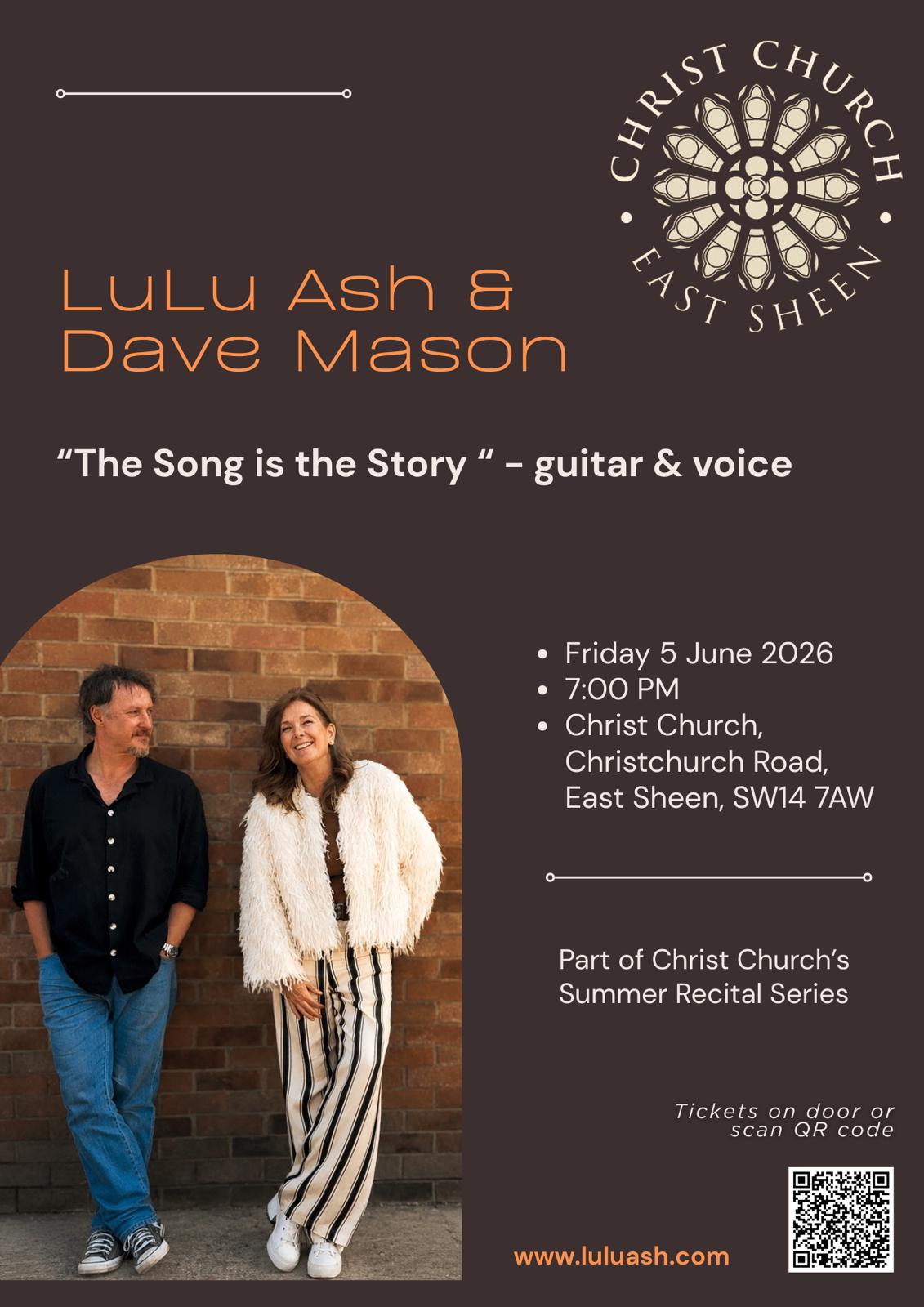
Local singer songwriter Lulu Ash opens the Friday evening concerts at Christ Church in the Summer Series on 5 June 2026.
Lulu will be presenting an acoustic evening celebrating storytelling through song. Featuring a mix of originals and tributes to some of the great songwriters of our time, carefully selected to showcase Christ Church’s beautiful acoustics.
Date & Time: 5 June 2026. Doors 630pm
Venue: Christ Church, Christchurch Road, East Sheen, London SW14 4AX
Tickets
https://www.ticketsource.com/christchurch-east-sheen/lulu-ash-summer-recital-series/e-rbppro
And the first Christ Church Wednesday concert is with Timothy Lin and his Viola de Gamba at 12 noon on 3 June 2006
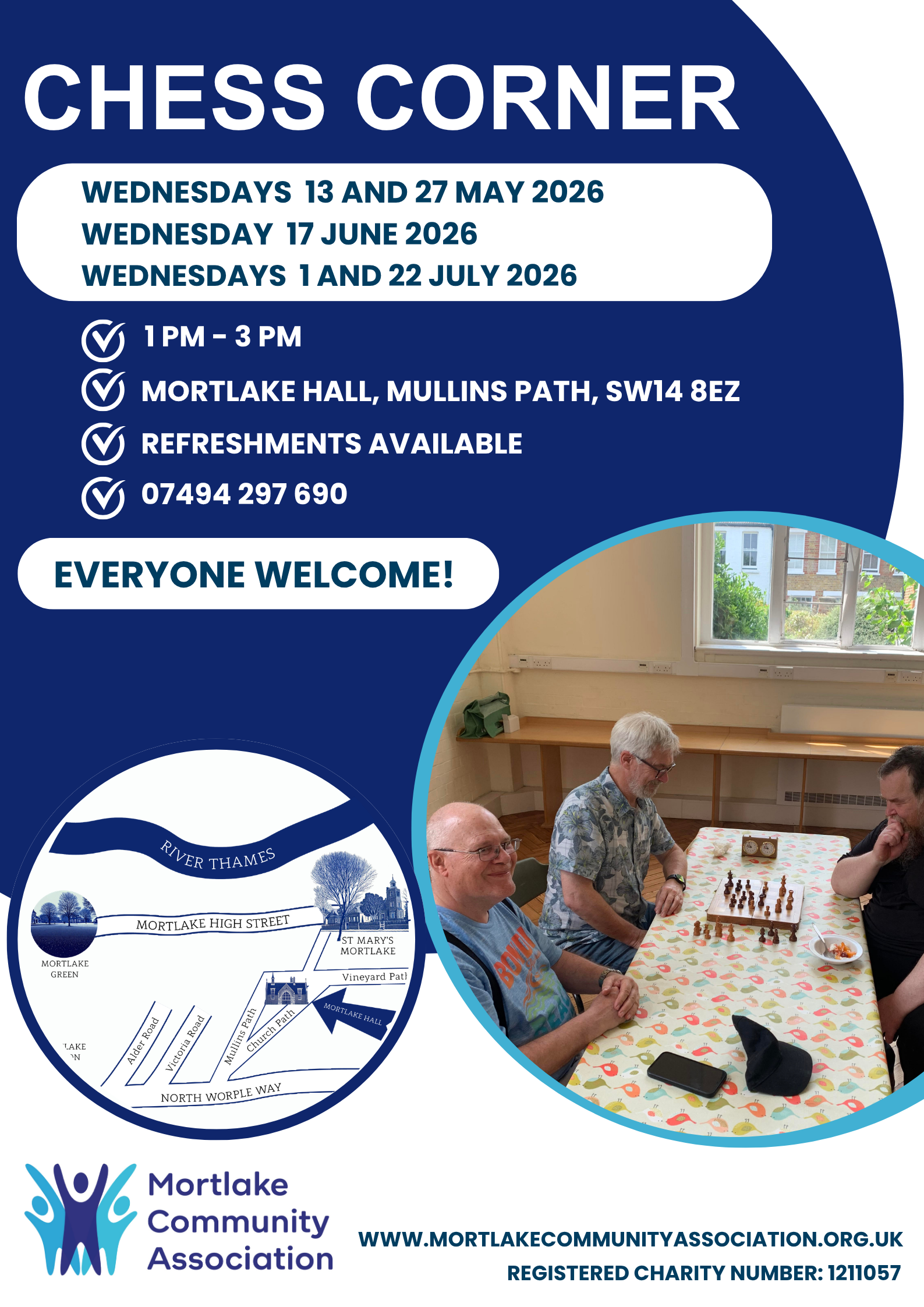
And tomorrow Mortlake Community Chess (MCC) plays a match against LIFTRPA at the school at 2pm on Thursday 18 June 2026. New recruits who may not have been able to get to sessions at Mortlake Hall are welcome to be part of the team.
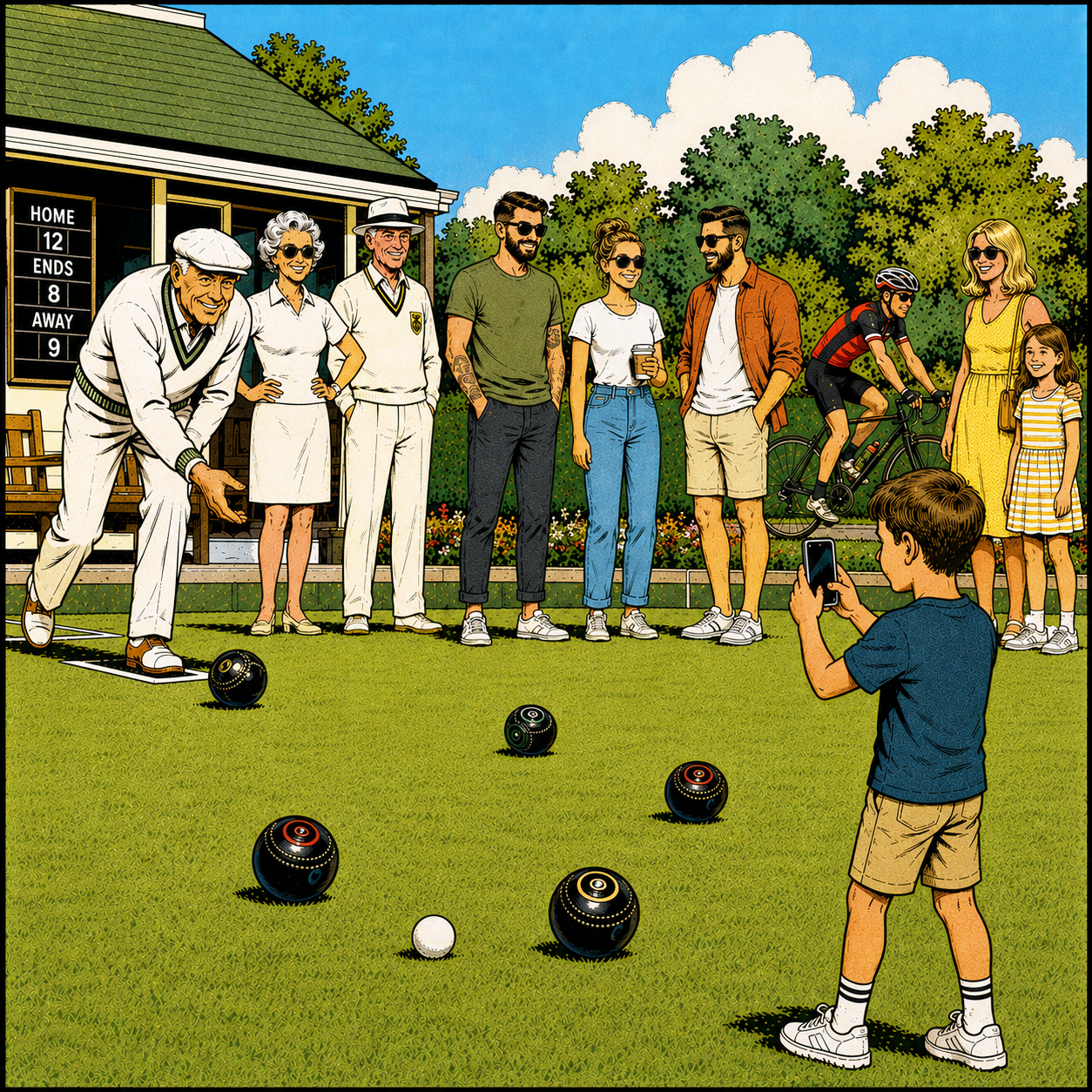
On Tuesday (May 26) there will be an informal gathering for anyone interested at the Bowling Club on Sheen Common (next to the tennis courts and behind the cricket pavilion) from 6.00pm.
You are invited to play bowls, have a chat, and enjoy the good weather. Feel free to come along and check it out. No obligation and no fee. Feel free to bring kids and friends, and your own refreshments. And feel free to pass on this message on to people or groups that might be interested.
All Saints Concert Series #2 – Sunday, 24th May – 6:00pm.
Young artists from the Jazz course at the Guildhall School of Music and Drama will be welcomed back.
The concert will be devoted to The Great American Songbook – music from the great eras of MGM Musicals, Broadway and Tin Pan Alley.
Tickets will be available at All Saints after the 10am Sunday services, through Eventbrite and on the door.
Sir Jeremy Hanley died on 22 May 2026. He was Conservative MP for Richmond and Barnes for 14 years from 1983 to 1997. He held a number of Ministerial posts and was Chairman of the Party in 1994/95.
As described by Tim Catchpole, Chair of MESS, in a recent talk, he was influential in the planning for the South Circular Road in Sheen.
Mortlake Community Association and Mortlake Hall Unite to Create a Lasting Home for Community Life
Two organisations at the heart of Mortlake’s community life have come together to secure a stronger, more sustainable future for the area. Mortlake Community Association and Mortlake Church of England Educational Foundation, which runs Mortlake Hall, have announced their merger to form a single charity, uniting activity and place under one organisation. The newly merged charity will be known as Mortlake Community Association (MCA), with the venue continuing as Mortlake Hall. Two trustees from the Mortlake Church of England Educational Foundation will join the merged charity.
Founded in 1980, MCA is a thriving local charity with a clear purpose: to reduce isolation, promote inclusion and empower people in and around Mortlake through the activities it facilitates. For many years, the home for these activities has been Mortlake Hall, a much loved nineteenth century former school building and one of the area’s most important community assets.
Mortlake Hall is a busy venue, hosting not only MCA activities but also children’s clubs, a variety of classes and many other organisations through private hire. Together, the two charities have supported generations of residents to connect, learn and belong.
The merger was announced at the MCA Annual General Meeting on 21st May 2026, where members endorsed the creation of a single charity with a permanent location and a sustainable future for both organisations’ activities.
“Bringing these organisations together allows us to protect what people value most while building something stronger for the future,” said Francine Bates, chair of the MCA trustees. “Our ambition is for Mortlake Hall to be a place people can visit every day – to meet friends, take part in activities and feel part of their community.”
For further information: info@mortlakecommunityassociation.org.uk
Continue reading