Stag Brewery Public Inquiry: Unit Values

Amid the miasma of complex evidence about viability and the level of affordable housing being submitted to the Public Inquiry, readers might be interested to be reminded of some interesting figures on how the the 1085 residential units would be constructed.

These are a total of 1,010 rather than the planned 1,085 units

27 Studio at an average value of £511,111 per unit

271 one bed at an average value of £627, 694 per unit

473 two bed at an average value of £856,818 per unit

221 three bed at an average value of £1,289, 412 per unit

18 four bed at an average value of £1,690,278 per unit

Who will be buying these? How many will go to overseas buyers?

Posted in Uncategorized | 5 Comments

Stag Brewery Public Inquiry Restarts

The Inquiry restarted today at Cole Court at 10am. Viability is the key question of the day. Cost of acquisition £158 million. Viability based on £32 million. Why? Let us hope we get an explanation today.

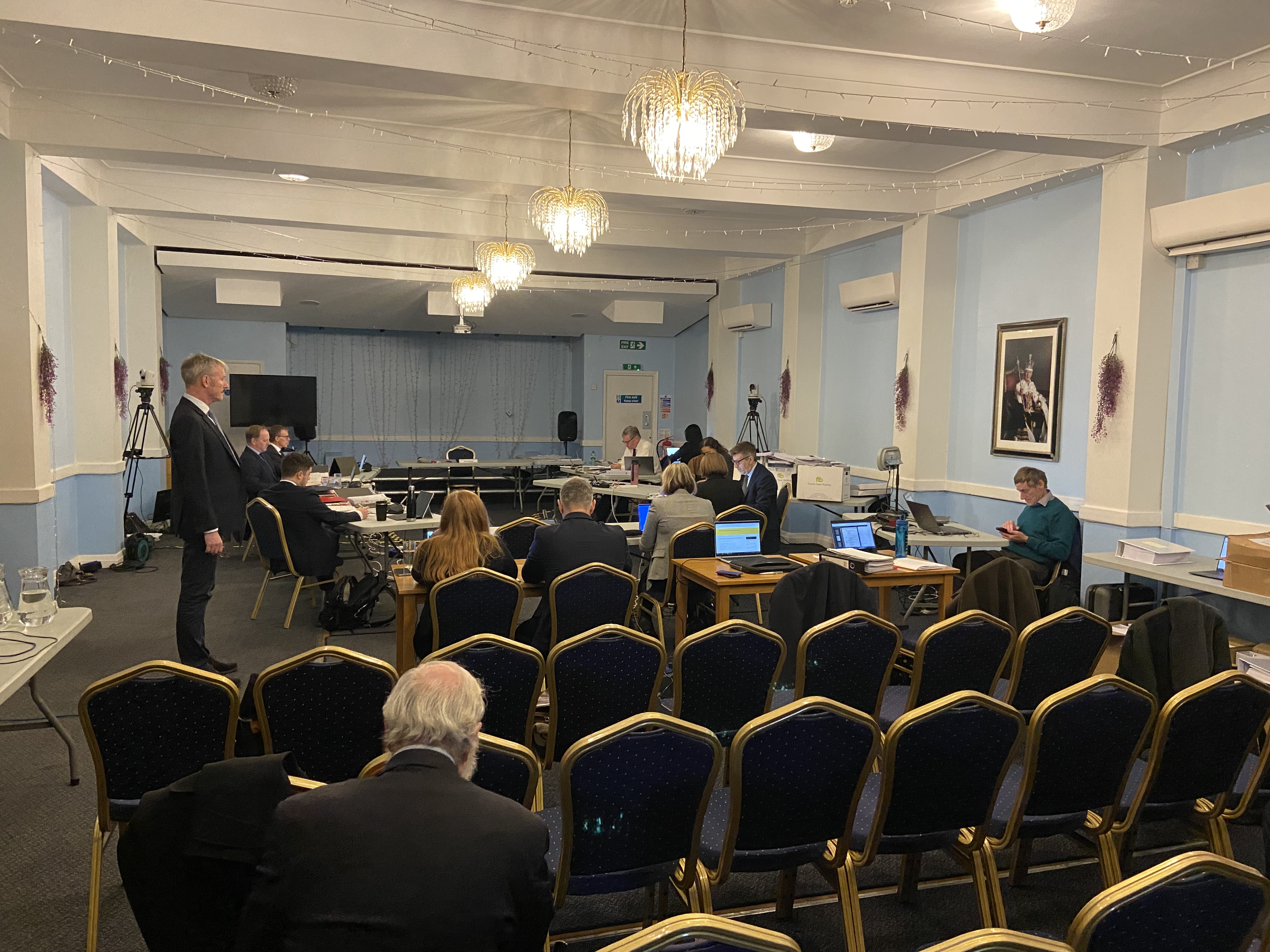
Smaller than Clarendon Hall but adequate. Livestreaming is working. But it could be renamed as Cold Court. The Inspector is wearing his overcoat!

Wifi OK. Evidence to come from Paul Giles on affordable housing, David Seddon on viability and Mark Weston on local need for social housing.

Posted in Uncategorized | 1 Comment

Parish week

Mothers’ Union Bring and Buy coffee morning at St Mary’s on Saturday 7 December at 10.15am 

Macmillan Carol Concert at All Saints at 6.00pm on Saturday 7 December (tickets £15 on the door) 

Posted in Uncategorized | Leave a comment

Kew Retail Park Development

Sarah Olney MP has also reported in her latest weekly newsletter that St George’s, the company behind the proposed Kew Retail Park, has decided to maintain it as retail space “for the foreseeable future”. This means that no plans are in place for a major development of the site.

This may have implications for the Stag Brewery Development. When St. George’s announced its ‘vision’ in 2022 the plan was for 1200 residential units. Richmond Council based part of its calculations of the need for a 1200 pupil secondary school in Mortlake on expected pupils in Kew.

Many already thought that those calculations were exaggerated, but this news would appear to put an additional dent in the Council plans. What will they now be saying to the Department for Education for the purposes of its review of the central government funding of free school projects?

Posted in Uncategorized | Leave a comment

Sarah Olney MP on the Terminally Ill Adults (End of Life) Bill

Sarah Olney has published her (well argued) letter about the Bill in Richmond Park News and on her website. It is just the kind of issue that should be debated locally and not just among those who subscribe to her LibDem Newssheet. 

She writes:

I have decided to vote against the Second Reading of the Terminally Ill Adults (End of Life) Bill this afternoon.

I have taken a long time to reach this decision, and it has been informed by a great deal of reading, consultation and – above all – correspondence with constituents who have made passionate and very personal cases on both sides of the debate. I am extremely grateful to everybody who has taken the time to share their thoughts with me and I have carefully read every email and considered what each constituent had to say. I am particularly grateful to people who shared difficult and painful experiences of losing loved ones, and of watching them suffer intensely at the end. I want to express my heartfelt sympathies to you all, and also my sincere thanks for your bravery in reliving those very difficult times. I can assure you that your messages were both appreciated and instructive.

I know that I am instinctively against the idea of assisted dying. I believe that as long as there is the ability to have meaningful human interaction and the capacity to feel joy, then life is always worth living. But, I am comfortable living in a world where people have access to options that I wouldn’t choose, especially where people would otherwise suffer a material harm.

There is a clear case for assisted dying. To ease the passage of those who are experiencing great pain and distress at the end of life and to give them some peace of mind and control over their final days. I am persuaded that there are situations where the law should not stand in the way of allowing people to choose this.

However, I am concerned that if we change the law to allow assisted dying, the consequences are difficult to predict. If assisted dying is allowed, will those suffering from a terminal illness feel that, by not choosing assisted dying, they are instead choosing to continue living, and choosing to be (as they may perceive it) a burden on their families? I cannot assess how likely or widespread this feeling may be. But I do worry that these concerns may weigh more heavily on the elderly and the disabled.

So, it is not easy to see which path is likely to lead to the greatest reduction of harm. How can we balance the rights of people to end their lives with dignity against the danger that people may feel under unwarranted pressure to make that choice?

It is clear to me that we should proceed with great care and caution in our framing of this legislation. The worst possible outcome would be a flawed bill that potentially puts vulnerable people at risk.

I have a huge amount of respect for Kim Leadbeater, the MP for Spen Valley who has brought this Bill before Parliament. I am grateful to her for the respectful and constructive way that she has conducted the lead up to today’s debate, and for her brave and passionate opening speech in the Chamber this morning. However, I believe that there are flaws in the way that the Bill has been drafted.

If the Bill passes at Second Reading today, there will be opportunities at Committee Stage and Report Stage to amend it and to address some of its shortcomings. But we can only amend the original draft. A government bill would have had extensive pre-legislative consultation and scrutiny before the initial draft came before the House. Private Members’ Bills frequently fail because they run out of time to complete all their stages in the time allocated, and I am concerned that a desire to get the stages completed in the limited time available will take precedence over the need to get the legislation framed properly. This is a flaw of the PMB process as much as of the Bill itself.

But it doesn’t give me confidence that we have time to fully consider all the implications of the proposed law or that the process will enable us to be sure that the vulnerable are fully protected. Given the profound implications of getting the legislation wrong, and the inherent risks of the legislative process, I have decided to vote against this bill today. I know that this will be an enormous disappointment for the many constituents who have written to me to urge me to vote in support. Many people have formed a firm view in favour of assisted dying in response to a traumatic experience of watching a loved one die, and I know that those people may think that I don’t understand how it feels.

I do understand. By coincidence, tomorrow – 30th November – is the anniversary of the awful day that my husband and I had to decide to switch off our son’s life support machine. We will be grieving his loss over the weekend, wishing we could relive that final hour one more time, and fruitlessly wondering what kind of person he would be now if he had survived. But we can grieve in peace, knowing that there was no choice, because his life was over.

I am sorry – truly sorry – if my vote today doesn’t reflect how you feel about your own experience of grief and loss. But it does reflect mine. And I hope you don’t doubt the depth of compassion and empathy I feel for the bereaved and grieving.

I am happy to continue to correspond with constituents who would like to share their thoughts. If the vote passes at Second Reading, then there will be more stages to come, and more opportunities for me to reflect upon the decisions to be made. I welcome all and every message that constituents wish to share.

Sarah Olney MP

See also yesterday’s post above

Posted in Uncategorized | Tagged , , , | 3 Comments

The Stag Brewery Public Inquiry: Mid-term report

We have had two weeks of evidence with two further weeks to come. What might be considered the most important evidence, on viability and affordable housing, will be heard over three days from Tuesday, 3 December 2024.

It can be seen what a coup it was to force the hand of Richmond Council to organise livestreaming of the hearings. Enabling residents to dip in and out of the evidence without having to sit around in Twickenham has enabled the community to engage in a far better informed debate than would otherwise have been the case.

One question frequently asked as a consequence is what will the outcome be? Put simply we will not know until the end of February at the earliest. The Inspector has played his cards very close to his chest.

What one can say is that the answer is not obvious. The Council and the developers might have thought at the beginning of the year that it was a foregone conclusion, a routine exercise in overcoming annoying local opposition. That is far from the case with an array of experts shedding considerable doubt on the suitability of the plans. People who may have thought this has been an empty brownfield site for too long, so we should accept any plan are voices now more rarely heard as the shortcomings have become apparent in open evidence rather than contained behind closed doors.

One useful test to consider is this. If the Inspector were to refuse the applications and the Minister declined to overturn his decision, would the Council or the developers appeal the decision to the Courts? Surely not. It would be difficult to overturn a decision, judicial or political, which had as its foundations;

an attempt to drive a coach and horses through a central tenet of affordable housing policy;

a planning decision based on community need rather than profit for the developers; and

a refusal to allow the character of Mortlake to be changed at a stroke.

A reasonable Council should already be planning for that possibility. It would be highly unwise and open to severe criticism if they were all to wake up to the new moon on 28 February 2025 and say to themselves ‘Oh dear, what shall we do now?’.

There are several options. No doubt Council Leaders will be sharpening their poisoned arrows to be loosed off at the Mayor of London, the Minister of Housing, Communities and Local Government and the residents of SW14, who they like to caricature as nimbies.

They could simply revert to the original planning brief. In the current climate and in the face of government decisions to be taken about funding new schools, it would surely not be difficult to engage with the Department of Education to change the school plans.

They would lose part of the Community Infrastructure Levy, but if they lose the case, they will lose that anyway. Lose, lose, lose. They would do better to seek to offset that loss by putting in place plans based on the original Planning Brief and accepting that they cannot squeeze the quart into a pint pot.

It would be a loss of face which the current Leaders may not be prepared to contemplate. But positive political thinking might approach the problem on the basis that, eighteen months on from the original planning decision and having heard all the evidence afresh, we can see the benefits of the original scheme of scaled down, more spacious, less high, residential units and a safer spot for a primary school, which might even give our transport thinking a chance of working.

But will they move out of their tunnel vision?

Posted in Uncategorized | Tagged , , , , | 3 Comments

Assisted Dying Bill

Your MP voted against the Assisted Dying Bill. How would her constituents have voted?

Posted in Uncategorized | 6 Comments

Richmond Park Cycling: Ongoing Discussions

Paul Richards during his talk about Richmond Park (https://wordpress.com/post/childlawobserver10.com/1006) to the Mortlake with East Sheen Society (www.mess.org.uk) on 28 October said:

“The speed limit on Park roads is 20 mph but this does not apply to bikes. ,,,,,The Park had asked the Department for Culture, Media and Sport to change the byelaws to stop speeding bikes. They had asked Strava and other similar apps to remove Richmond Park from their apps, given that they encouraged competitive racing and recording personal best times.”

The Department for Culture Media and Sport, which has Government responsibility for the parks, has now said: “We have received a proposal to improve safety for park users from the Royal Parks and are considering it.”

A Royal Parks spokesman said although cycling has a “deep-rooted history” in the city’s parklands, “the speeds that can now be achieved when cycling in such populated spaces bring new challenges that we are committed to addressing”.

The charity had said: “The parks are shared spaces where pedestrians, cyclists and wildlife coexist, and we have a responsibility to all park users to ensure we are acting in a way that protects and promotes their safety. We continue to work closely with cycling groups, community groups and the Met Police to do all we can to ensure the parks can be enjoyed safely by everyone, now and in the future.”

Richmond Park is having discussions with Strava, and with Richmond Park Cyclists and Regents Park Cyclists with a view to drafting a new Cycling Policy for the Royal Parks.

Posted in Uncategorized | Tagged , | 2 Comments

Supporting Local Small Shops

If you are an American Express cardholder then consider supporting your favourite local small shop by voting for them in the Champion Small 2024 event.

Go to https://www.americanexpress.com/en-gb/life-with-amex/shop-small/

Posted in Uncategorized | Leave a comment

Community Bluescapes

Community BlueScapes is a partnership between London Borough of Richmond upon Thames, Barnes Common Limited, and WWT. They are coming together to create healthier neighbourhoods in the Beverley Brook catchment in Richmond and ensure communities are flood and weather resilient in the near future. 

Community BlueScapes https://www.richmond.gov.uk/community_bluescapes has been awarded £6million by the Department for Environment Food and Rural Affairs as part of the £200 million Flood and Coastal Innovation Programmes managed by the Environment Agency. The programme will drive innovation in flood and coastal resilience and help residents adapt to a changing climate. One of the underlying approaches to the work is to contain more in existing water sites along the length of Beverley Brook to its exit into the Thames near the Barnes Wetlands Centre. A new pond is being developed in Vine Road.

See also https://richmondclimatestrategy.commonplace.is/en-GB/proposals/community-bluescapes/start

Readers will recall that Richmond Park Manager Paul Richards spoke about water management at his talk to the Mortlake with East Sheen Society (www.mess.org.uk) on 28 October 2024 (see below). They are engaged on Wetland Enhancement Projects 2024. Formerly they allowed water to drain away. They are now keeping a high water level in the Park, while avoiding flooding. There are new drainage schemes controlling flows into Beverley Brook. It was necessary to control entry to the Thames, so that it did not flood at Barnes and Mortlake. They are working with Barnes and Wimbledon Commons.

There is a puzzle in all this. The work all relates to the areas east of Priests Bridge, Castelnau and Rocks Lane and then up to Richmond Park. The area to the west of White Hart Lane is perhaps the most vulnerable for the river bank and towpath and the residents in the low-lying parts of Mortlake. The Beverley Brook water system is adjacent to that part of the Thames. As described in Bert Flood below it is vulnerable to upstream and downstream flooding. But Richmond Council seems to be leaving that to the tender mercies of the Stag Brewery developers, a far cry from Community Bluescapes and its work to involve the local communities.

Posted in Uncategorized | Tagged , , , , , , | 1 Comment