
Christ Church in East Sheen was fortunate to host an interview with local resident and broadcaster Julie Etchingham on Tuesday 10 November 2026. Introduced by local parishioner Mireille Stanton, Julie took part in a wide-ranging question-and-answer session about her career, the changing media landscape and the responsibility of journalists.
Julie’s interest in news began early. She kept a news diary from the age of five, prompting her mother to suggest journalism as a possible career. Growing up in Leicester, she followed local news closely and gained work experience at the age of 15. Her advice to aspiring journalists was simple: do not be reluctant to pick up the telephone and pursue an opportunity.
While in the sixth form, Julie worked with BBC Radio Leicester on a programme for Holy Week. After university, she secured a place on the BBC’s highly competitive training programme, where only one of the successful applicants was a woman. She recalled learning not to become “the person who got up to make the tea”. Although sexism was more prevalent then, she noted that such behaviour would not be tolerated today and welcomed the much stronger representation of women in journalism. She also paid tribute to the excellent male mentors who have supported her throughout her career.
Julie went on to work for BBC Midlands and Newsround. Although intended for children, Newsround also attracted a sizeable adult audience because it explained complicated events clearly. Reporting from Bosnia at the end of the war taught her the importance of ensuring that children’s voices were heard. She later returned to Mostar and met some of the same people she had interviewed as children.
A move to Sky News gave Julie her first regular role as a news anchor. Two months after joining, she discovered that she was pregnant and returned to work four months after the birth. She subsequently joined ITV News, where she became one of the presenters of the flagship News at Ten. She described it as a great honour to present alongside Trevor McDonald.
Julie explained how a typical working day develops. After checking with the office at around 9 a.m. to establish the shape of the day, she arrives at lunchtime to help organise the programme. News at Ten aims to draw together and explain the day’s events, although the running order and scripts may change at the last moment. As presenter, she regards herself as the final line of defence against mistakes and may even rewrite copy while on air.
She is closely involved with the programme editor in deciding which stories appear, their order and prominence, and how they should be covered. She believes television journalism begins with the pictures, with the writing complementing them, and that interviewees should be allowed to speak in their own voices as much as possible.
Some of Julie’s most memorable work has involved people who are not famous. She spoke movingly about interviewing that morning a young man who had been trafficked and subjected to online livestreamed abuse. His courage in telling his story left a real impression on her. Such testimony creates a responsibility to honour the person and tell the story properly. Her sustained interest in human trafficking and modern slavery also led to an encounter with Pope Francis.
Julie has reported from many difficult situations. When Iran was bombed, she travelled to Turkey the following day with her husband’s encouragement. She kept a bag packed so that she can leave quickly, while specialist safety equipment can be handed over at the airport. She also recalled interviewing Tom Cruise – an experience she joked she could “dine out on”.
Discussing the future of broadcast news, Julie acknowledged that television audiences are declining and that most News at Ten viewers are now over 50. Nevertheless, she remains confident in public-service broadcasting and its obligation to provide high-quality evening news. ITV continues to rank among the top three of the country’s most trusted broadcasters.
The role of established news organisations, she said, is to showcase the best original journalism. Sending reporters to places such as Afghanistan is costly because of travel, security and other practical requirements, but this work remains essential. Reports can then be edited and repackaged for TikTok, Instagram and YouTube, where younger audiences increasingly consume news. Longer reports can perform particularly well on YouTube. “We have to find where people are,” she said, “and take the news to them.”
Local journalism has faced particular pressure over the past 10 to 15 years. Julie stressed its importance both in uncovering stories and in providing a pathway for future journalists. National reporters also depend on local journalists for knowledge and insight, even as regional coverage becomes increasingly dispersed and digital.
Alongside her television work, Julie presents Sunday, BBC Radio 4’s programme covering religion related news. This can mean presenting News at Ten on Friday evening, travelling to Salford and preparing for Sunday morning’s programme.
Julie concluded by reflecting on what still excites her about journalism. The “thrill of the chase” remains part of the job, but its deeper purpose is accountability: when there is a story that someone does not want told, journalists have a duty to investigate it and hold power to account.
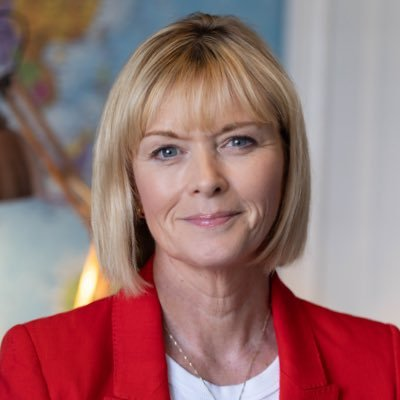
Julie is a Patron of Mary Ward Loreto, a Foundation undertaking frontline work to protect people at risk, empower survivors, and strengthen communities in Albania and an Ambassador for CAFOD, the Catholic Agency for Overseas Development.
Discover more from EastSheenMatters
Subscribe to get the latest posts sent to your email.


